Published 22 November 2026 · 4-minute read
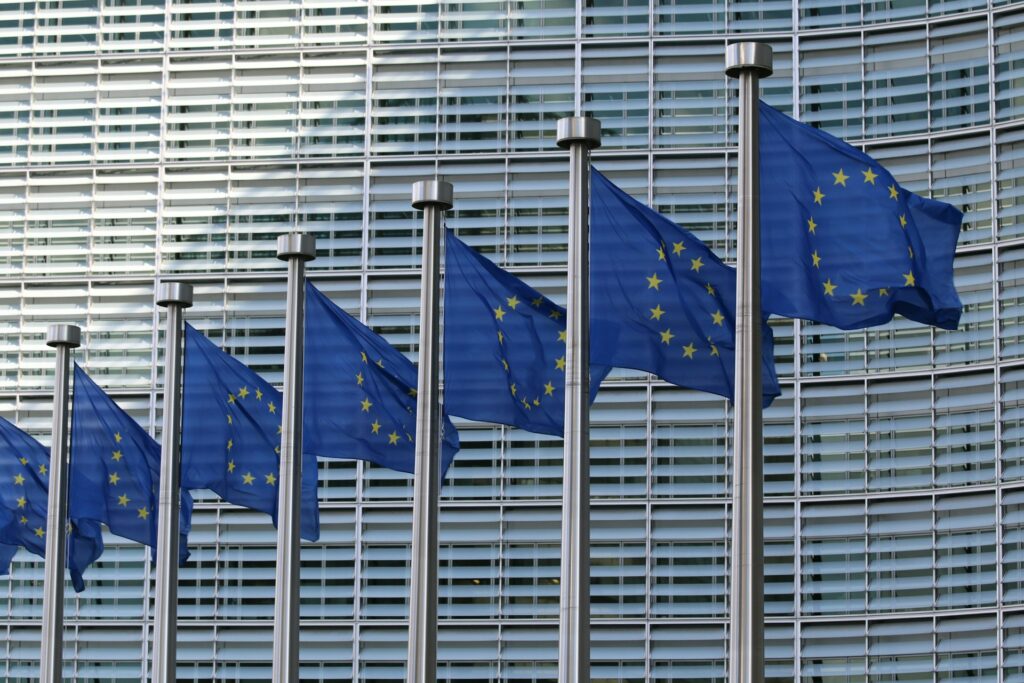
Brussels hosts the EU institutions, NATO, more than 300 diplomatic missions and a public affairs ecosystem like no other: more than 12,000 interest representatives are listed in the EU Transparency Register. Federations, companies, NGOs, regions, cities and consultancies compete for a few minutes of decision-makers’ attention.
In this competition, people talk a lot about networks, timing and data. They rarely talk about language. Yet it is one of the most effective, and least exploited, levers.
In short
- English is the working language of the “bubble”, but not of every decision-maker.
- An MEP, a national attaché or a minister reads an argument in their own language more readily.
- Each stage of the legislative process has its own counterparts and languages.
- Multilingual events with interpreting widen your audience.
- National transposition happens in the member states’ languages.
English is enough… up to a point
In Commission corridors, position papers and technical meetings, English dominates. But decisions are also made elsewhere: in the European Parliament, with members from 27 countries; in the Council, where positions are prepared in national capitals; and in member states, which transpose directives. At these stages, your counterpart’s national language comes back into play.
A technical argument read in one’s mother tongue is better understood, better remembered and more easily passed on internally. For a rapporteur or national attaché, it is also a mark of respect.
The legislative process, step by step
| Stage | Counterparts | Language lever |
|---|---|---|
| Commission public consultation | Directorates-General, lead unit | Polished English contribution, possibly mirrored in your language |
| Proposal and negotiation | Rapporteur, shadow rapporteurs, assistants | Briefing note in the rapporteur’s language |
| Member state positions | Permanent representations, national ministries | Documents in the languages of key capitals |
| Trilogue | Negotiating teams | Short, precise, bilingual messages |
| National transposition | Ministries, national parliaments, regions | Translation of the issues and text into the national language |
Documents that carry weight in every language
- Position paper: an English reference version, adapted into French, German or the languages of priority member states.
- One-page briefing notes for MEPs and their assistants.
- Draft amendments in the committee’s working language, with translations for the members concerned.
- Press releases and op-eds adapted for national media, not just translated.
Public affairs translation is not literal translation: it must keep the strength of the argument, the exact terminology of the EU text and the expected institutional tone.
Events that reach beyond the bubble
Breakfast at Parliament, roundtable, annual conference, site visit: an interpreted event lets you invite elected officials, national civil servants and practitioners who would not speak as freely in English. Depending on the format, simultaneous interpreting with booths or a portable system for a small group.
See our guide to organising a multilingual event in Brussels.
The Belgian level: French and Dutch
If your file also concerns Belgian authorities (federal, regions, communities), counterparts work in French or Dutch. An English-only note loses part of their attention. Belgian language rules are explained in our article on French–Dutch translation in Belgium.
Transparency and compliance
Meeting a Commissioner, a cabinet member or certain senior officials requires registration in the Transparency Register. Prepare your registration before your campaign: read our guide to the Transparency Register.
How we support public affairs teams
- Translation and adaptation of position papers, notes and amendments, using the official terminology of EU texts.
- Urgent translations timed to the parliamentary agenda.
- Interpreters and equipment for your events, at Parliament or elsewhere.
- Monitoring and translation of national transposition texts.
- Strict confidentiality on sensitive files.
See our dedicated service: translation and interpreting for EU affairs.
A public affairs campaign or event to prepare?
A position paper to adapt, a roundtable to interpret: a project manager replies within 5 minutes.
Request a free quote WhatsApp +32 494 77 88 76Frequently asked questions
Should a position paper be translated into several languages?
Not always. But for the key MEPs and ministries in your file, a version in their language significantly increases impact.
Can I reply to a Commission consultation in a language other than English?
Yes, contributions can be submitted in the EU’s official languages. Writing in English is often still the most effective way to be read quickly.
Can you translate at very short notice?
Yes, for notes and amendments tied to a vote, we organise same-day translations.
Do you provide interpreters for events at the European Parliament?
Yes, for your events in available rooms or elsewhere, with the right equipment.
Are my documents handled confidentially?
Yes: confidentiality commitment, no public translation tools and a non-disclosure agreement on request.